
A Knowledge Platform for Island Conservation Communities.
Plastic-Free Islands Network · Nonprofits & Social Services
Developing a SharePoint Modern Site and Search Experience for a Nonprofit Plastic-Pollution Network
Executive summary
The Plastic-Free Islands Network (PFIN) is a nonprofit community of practice connecting experts in plastic pollution, small islands, network building, and data analysis, so island communities worldwide can share discoveries and success stories rather than solve the same problems in isolation. The stakes are real and urgent: a July 2020 analysis by The Pew Charitable Trusts and SYSTEMIQ found that without immediate action, the amount of plastic flowing into the ocean each year could nearly triple by 2040. PFIN needed a community platform fast — one that let members quickly find relevant content, contribute their own documents and project details, search and filter by topic and location, and track activities, discussions, and news — but had no existing collaboration infrastructure to build on. Iknow took on the engagement pro bono.
Iknow chose SharePoint Online as the platform, drawing on reusable building blocks from prior work to move quickly. The site was delivered across four phases: developing a custom taxonomy for plastic waste topics, building out document libraries and structured lists for people and projects, configuring SharePoint Modern Search web parts and term-driven pages, and finalizing the site’s search filters, views, and community-facing areas. Within about six months, PFIN had a working, actively used community platform where members could contribute content that appeared immediately in search results and topic pages, with island communities like Curaçao, one of PFIN’s earliest participants, already generating real activity on the site.
Background & context
About the Client
PFIN is a nonprofit that brings together a community of people focused on reducing plastic pollution on islands. Its leaders act as knowledge brokers and conveners: experts in plastic pollution, small islands, network and community building, and data analysis, whose role is connecting people so they can share discoveries and success stories rather than duplicate effort.
Industry Context
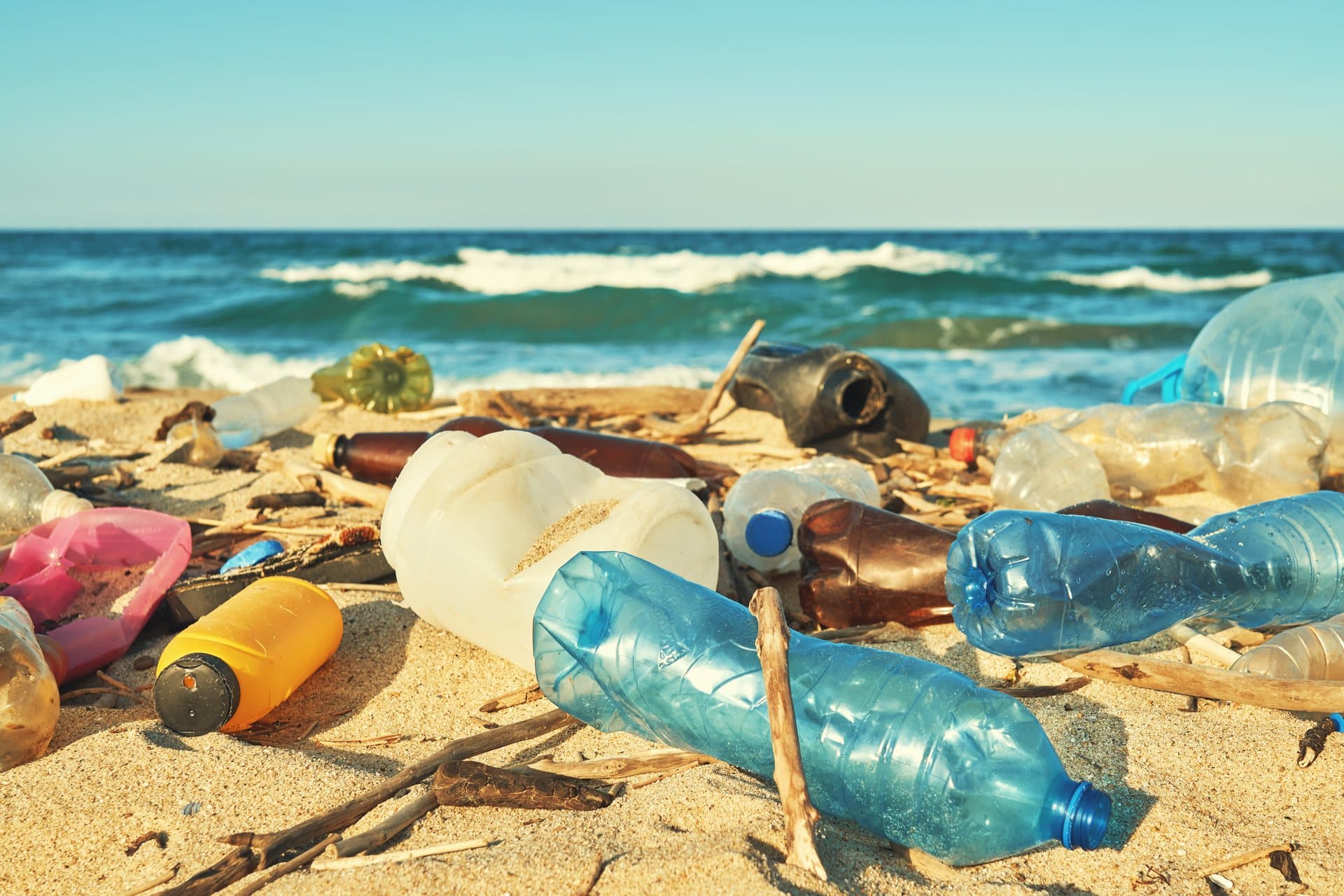
Islands face a uniquely difficult version of the global plastic pollution problem: geographic isolation limits local waste management infrastructure and options, while ocean currents actively concentrate plastic debris from far beyond their own shores onto their coastlines. That challenge plays out against an urgent global backdrop: The Pew Charitable Trusts and SYSTEMIQ’s July 2020 “Breaking the Plastic Wave” analysis found that, without meaningful action, the amount of plastic entering the ocean each year could nearly triple by 2040, from about 11 million to 29 million metric tons. For under-resourced island communities working on this problem, a shared platform for finding each other’s prior work and solutions is not a luxury; it is often the only realistic path to avoiding duplicated effort and moving faster than the problem itself.
Current Situation
PFIN’s value as an organization rested entirely on its ability to connect people and let them share and reuse each other’s knowledge, but the network had no digital home for that work. Iknow’s task was to quickly develop a community platform letting PFIN stakeholders find relevant content about plastic pollution initiatives, easily contribute documents, project activity, and their own details, search and filter by topic, location, and content type, track and discuss activities and outcomes, and share news and events.
Problem / challenge
- No existing platform to build on. PFIN needed a fully functional community knowledge platform, with no existing collaboration infrastructure or content management system in place to start from.
- A genuinely global, resource-limited community. PFIN members are spread across island communities worldwide, typically with limited technical resources of their own, so the platform had to be simple enough for non-technical contributors to use directly.
- A wide range of functional needs in one platform. The site had to support search and discovery, structured content contribution, discussion and activity tracking, and news and events, not just document storage.
- Urgency, without room for a long build. Given the accelerating scale of the plastic pollution problem, PFIN needed a working platform quickly rather than a multi-year technology program.
Project objectives
- Let PFIN stakeholders quickly find relevant content about plastic pollution initiatives.
- Make it easy for members to contribute documents, project activities, and personal details to the community.
- Support search and filtering by topic, location, and content type, plus general browsing.
- Enable tracking and discussion of activities and outcomes, and provide a way to share news and events.
Iknow’s approach
How Iknow Structured the Work
Iknow chose SharePoint Online as the platform based on the availability of key building blocks from previous work and the ability to rapidly develop the infrastructure PFIN needed, structuring the engagement into four phases: taxonomy development, creation of lists and libraries, SharePoint infrastructure set-up, and final configuration.
Key Activities & Decisions
- Taxonomy development. Iknow and PFIN leaders reviewed existing taxonomies for plastic waste topic areas and customized them to fit the community’s goals, resulting in a taxonomy with facets for waste type, waste location, plastic lifecycle stage, organization type, geographical location, and project type, implemented in the SharePoint term store.
- Creation of lists and libraries. Iknow built a document library plus structured lists for People and Project information as the site’s foundational elements, populated with PFIN’s documents, useful web links, projects and initiatives, and community member details, all sharing a core set of site columns linked to the term store facets so users could only enter managed-vocabulary terms.
- SharePoint infrastructure set-up. Iknow used SharePoint Modern Search web parts for search and term-driven site pages, setting up the managed and crawled properties, result sources, and query strings needed to auto-populate pages, so term-driven pages could be quickly created as stored searches for any taxonomy term.
- Final configuration and implementation. Iknow configured the detailed design of each page, including search filters, sort options, and result view fields, along with home page design, news and events areas, and outcomes measurement, with the latter areas flagged for further development.
Stakeholders & Collaboration
Iknow worked directly with PFIN’s leadership team, who served as both subject-matter experts for the taxonomy and site administrators for ongoing configuration once the platform launched.
Challenges & how Iknow overcame them
Building a Full-Featured Platform Quickly, With No Existing Foundation
PFIN needed a genuinely capable community platform without an existing technology base or budget to build one from scratch. Iknow addressed this by choosing SharePoint Online specifically because reusable building blocks from prior Iknow work let the team move fast rather than developing custom infrastructure, delivering a working site within about six months, pro bono.
Making a Shared Vocabulary Usable by a Globally Distributed, Non-Technical Community
A taxonomy is only useful if contributors around the world can apply it consistently without special training. Iknow addressed this by building the taxonomy directly with PFIN leaders around the community’s own goals, then enforcing it through site columns linked to the SharePoint term store, so contributors could only select valid managed terms rather than needing to recall a controlled vocabulary from memory.
Results & impact
Quantitative Outcomes
- Taxonomy facets delivered: Six — waste type, waste location, plastic lifecycle stage, organization type, geographical location, and project type.
- Site foundation: One document library plus structured People and Project lists, all integrated with the shared term store.
- Delivery timeline: Core site features and content developed rapidly within the roughly six-month engagement.
- Access model: SharePoint Groups/Azure Directory-based, with Guest Access for most contributing users and administrator access reserved for PFIN leadership.
Qualitative Outcomes
PFIN went from no digital home to an actively used community platform where members could contribute content that appeared immediately in search results and topic pages. The term-driven “Quick Look” pages gave PFIN an easy way to spin up a dedicated view for any topic or location — demonstrated with Curaçao, one of PFIN’s earliest participating islands — without custom development for each one. Because content contribution and search were opened to Guest Access users, PFIN’s globally distributed, resource-limited community could participate directly rather than depending on a small technical team to publish on their behalf. Delivered pro bono, the engagement gave a mission-driven nonprofit enterprise-grade search and knowledge-sharing capability it likely could not have afforded commercially.
Timeline to Impact
Iknow delivered the core platform within the six-month engagement, followed by ongoing fine-tuning based on user feedback, with the site in active use by PFIN community members by the engagement’s close.
Iknow’s capabilities demonstrated
Core Skills
- Taxonomy development
- SharePoint Modern search & site development
- Community knowledge platform design
- Nonprofit / pro bono technology delivery
Methods & Frameworks
- Rapid platform development using reusable building blocks
- Managed-vocabulary-enforced content governance
- Term-driven page generation
Technologies & Tools
- SharePoint Online and SharePoint Modern Search web parts
- SharePoint term store
- SharePoint Groups / Azure Directory

Put this experience to work on your problem.
Much of our work never reaches the website. Book a call, tell us your sector and we will walk you through the engagements that map to yours.