
From Assessment to Action: Rebuilding the Search Experience Behind the Nation’s Wildland Fire Safety Repository.
National Wildfire Coordinating Group · Government
Content Enrichment, Platform Migration, and Search Engine Reconfiguration Following a Comprehensive Technology Assessment
Executive summary
A comprehensive technology assessment Iknow delivered for the Wildland Fire Lessons Learned Center (WFLLC) had identified a specific, high-priority gap: the center’s enterprise search product had been implemented poorly, and its content carried little of the structured metadata that effective search depends on. Firefighters and incident teams searching WFLLC’s knowledge base for a relevant lesson too often came away empty-handed, not because the lesson didn’t exist, but because the platform had no reliable way to help them find it. The National Wildfire Coordinating Group (NWCG), through prime contractor Solutions KM, brought Iknow back to fix the problem directly.
Over a seven-month engagement, Iknow ran two coordinated workstreams: enriching WFLLC’s content with a new, wildland fire-specific taxonomy and metadata, and reconfiguring the center’s enterprise search engine to put that taxonomy to work. Iknow built the taxonomy through structured workshops with WFLLC staff, migrated the center’s content into a new content management platform, tagged it with the new metadata, and reconfigured the search engine with keyword, faceted, advanced, and browse search options tuned for relevance. The result was a search experience finally built for how the wildland fire community actually looks for safety knowledge.
Background & context
About the Client
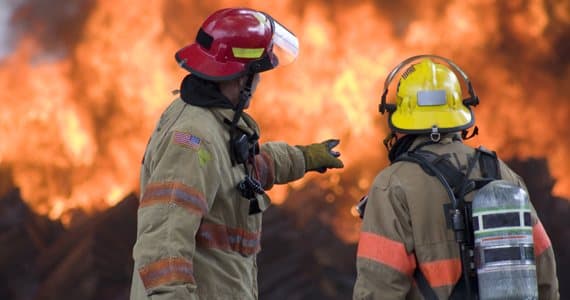
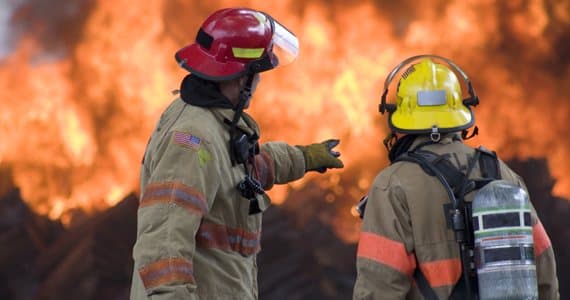
WFLLC, headquartered in Tucson, Arizona, serves as the wildland fire community’s central repository for lessons learned, safety bulletins, and after-action reviews, supporting well over a million wildland firefighters and support personnel nationally. WFLLC operates under NWCG, the interagency body that sets training, qualification, and operational standards across the U.S. Forest Service, National Park Service, and other federal, state, and tribal wildland fire agencies.
Industry Context
Enterprise search is only as good as the metadata behind it. Without a controlled vocabulary and consistent tagging, even a well-built search engine returns results ranked on keyword matching alone, missing the conceptual relationships — between an incident type, a hazard, a terrain condition, a lesson category — that a subject-matter taxonomy makes explicit. By the early 2010s, organizations managing large, specialized content bodies were increasingly pairing enterprise search with dedicated taxonomy and content-classification platforms to close exactly this gap, particularly in domains like wildland fire safety, where the vocabulary is technical and the cost of a missed lesson is measured in more than lost time.
Current Situation
In an earlier assignment under the same multi-year contract (Iknow Case Study #122), Iknow conducted a comprehensive assessment of WFLLC’s websites and identified search and content quality as areas of greatest need, finding that WFLLC’s existing search product had been implemented poorly and needed to be reconfigured. NWCG and Solutions KM asked Iknow to act on that finding directly: enrich WFLLC’s content with new, wildland fire-specific metadata and upgrade the search product’s configuration to use it.
Problem / challenge
- A poorly implemented search product. WFLLC’s existing enterprise search engine had been configured without the taxonomy or metadata needed to return relevant results, frustrating users who already had difficulty finding information.
- No wildland fire-specific taxonomy or metadata. WFLLC’s content lacked a controlled vocabulary or consistent tagging, leaving search results dependent on raw keyword matching alone.
- Content scattered without structure. Years of documents, videos, and other materials existed without standardized organization, with irrelevant or duplicate content mixed in among genuinely valuable lessons.
- No unified content platform. WFLLC’s content still lived across its legacy websites rather than in a modern content management system capable of storing metadata alongside the content it described.
Project objectives
- Design a comprehensive taxonomy and a set of WFLLC-specific content metadata tags.
- Migrate WFLLC’s content into a new content management platform, retiring dated material and tagging the rest with the new metadata.
- Reconfigure WFLLC’s enterprise search engine to incorporate the new taxonomy, metadata, and migrated content.
- Implement new search user interfaces — including faceted, advanced, and browse options — tuned for relevance.
Iknow’s approach
How Iknow Structured the Work
Iknow organized the engagement into two coordinated workstreams — Content Enrichment and Search Engine Enhancement — delivered across eight sequential steps, each lasting two to 12 weeks, reflecting Iknow’s taxonomy design and content classification methodology for grounding search improvements in a genuine, domain-specific information architecture rather than search-engine tuning alone.
Key Activities & Decisions
- Taxonomy and metadata development. Iknow analyzed WFLLC’s existing content and metadata using text-analytics entity extraction, then built and refined a wildland fire-specific taxonomy and metadata tag set through structured taxonomy and content-tagging workshops with WFLLC staff.
- Content platform migration. Iknow stood up a new content management platform, migrated WFLLC’s content into it, retired outdated material, and tagged the remaining content with the new metadata so articles and their metadata were stored together.
- Search engine reconfiguration. Iknow validated and reconfigured WFLLC’s enterprise search installation, loaded the new taxonomy into it, and rebuilt the search index against the newly tagged content.
- New search interfaces. Based on representative end-user use cases, Iknow designed and implemented new search result displays, advanced search, and browse and faceted navigation, tuning the results-ranking algorithm for relevance and reviewing the new designs with end users before finalizing them.
Stakeholders & Collaboration
Iknow served as subcontractor to Solutions KM, prime contractor on NWCG’s multi-year modernization contract, working directly with WFLLC staff throughout the taxonomy and content-tagging workshops and building on the findings from Iknow’s earlier WFLLC technology assessment.
Challenges & how Iknow overcame them
Building a Domain-Specific Taxonomy From Scratch
Wildland fire safety content uses a technical, specialized vocabulary that a generic taxonomy could not have captured. Iknow addressed this by grounding the taxonomy in WFLLC’s own content and expertise — using entity extraction to surface the terms actually in use, then refining the results through dedicated taxonomy and content-tagging workshops with WFLLC’s own staff rather than designing the vocabulary in isolation.
Migrating and Tagging Years of Legacy Content Without Losing Continuity
Retagging and migrating years of accumulated content risked either disrupting access to safety-critical material or preserving so much dated content that findability didn’t actually improve. Iknow addressed this by building content clean-up and de-duplication directly into the process, deliberately retiring outdated material during migration rather than after, so the new platform launched with a smaller, better-organized, and more trustworthy body of content.
Results & impact
Quantitative Outcomes
- Taxonomy delivered: A new, comprehensive wildland fire-specific taxonomy and metadata tag set developed and implemented.
- Content migrated and tagged: WFLLC’s content migrated into a new content management platform, cleaned up, and richly tagged with the new metadata.
- Search capabilities delivered: Reconfigured enterprise search with new keyword, faceted, advanced, and browse search options.
- Program scope: Two workstreams and eight sequential implementation steps delivered, from taxonomy development through search interface tuning.
- Engagement duration: Seven-month assignment, as part of a multi-year contract.
Qualitative Outcomes
WFLLC came away with a search experience finally built on a genuine information architecture rather than raw keyword matching, directly resolving the search and findability gap Iknow’s earlier assessment had identified. Content that once sat unorganized across disjointed legacy sites was consolidated, cleaned up, and richly described, and the reconfigured search engine’s ranking algorithm was tuned to surface more accurate, relevant results — turning the wireframed, future-state vision from Iknow’s earlier assessment into a working platform.
Timeline to Impact
Across a seven-month engagement, Iknow moved WFLLC from a poorly implemented search product and untagged legacy content to a fully reconfigured search platform built on a new taxonomy, a migrated and cleaned content base, and search interfaces tuned and validated with end users. In a single engagement, Iknow delivered the search and findability improvements WFLLC’s earlier assessment had called for.
Iknow’s capabilities demonstrated
Core Skills
- Taxonomy design and development
- Content classification and metadata tagging
- Enterprise search configuration and tuning
- Content management platform implementation
Methods & Frameworks
- Workshop-based taxonomy and metadata development
- Text analytics-assisted content processing and entity extraction
- Phased, two-workstream implementation methodology
Technologies & Tools
- Smartlogic Semaphore (taxonomy, ontology, and content classification)
- Microsoft SharePoint and SQL Server (content management platform)
- Coveo Enterprise Search (search indexing, faceted navigation, and relevance tuning)

Put this experience to work on your problem.
Much of our work never reaches the website. Book a call, tell us your sector and we will walk you through the engagements that map to yours.